|


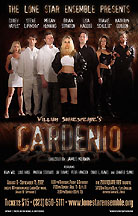
The lost In the early 1990s, the late Charles Hamilton -- a Shakespearean researcher and handwriting analyst -- performed a careful study of an obscure, anonymous play located in the British Museum Library and variously attributed to numerous Jacobean writers (including Thomas Middleton). Hamilton was immediately struck by a number of coincidences in the nameless manuscript. It had been entered into the British Stationer's Register in 1612. It was clearly based on two subplots from the novel Don Quixote. And it included the names of two cast members -- actors who were long-standing members of the King's Men (Shakespeare's ensemble). Following a detailed statistical analysis of the play's vocabulary and a thorough examination of the document's handwriting, Hamilton concluded that this untitled work is, in fact, Shakespeare's Cardenio. His findings, published in 1994, have sparked lengthy debates in the academic community for the past decade. For our purposes, Cardenio is a fascinating example of Shakespeare's later writings, as it incorporates a number of the themes so prevalent in his final plays: disillusionment with the nature of our world; needless destruction of innocence (particularly female innocence); and a lack of clarity between the moral absolutes of "right" and "wrong," "protagonist" and "antagonist." The story's secondary plot, likely written by Fletcher, is a testament to the skill and appeal of this sadly overlooked playwright, whom history has unfortunately saddled with the title of "Shakespeare's co-author." Using his trademark snappy, naturalistic dialog to craft a subplot which mirrors yet contrasts with the Bard's primary storyline, Fletcher maintains a level of self-referential wit often lost on the casual reader. In the tradition of 2001's
live multimedia adaptation of CARDENIO IMAGE GALLERIES
|
||||||||||||||||||||||||||||||||||||||||||